YouTube is set to update its policies soon, targeting low-quality content generated by AI. However, it’s still unclear exactly what types of videos will be affected.
Recently, social media has been flooded with posts claiming that the world’s largest streaming platform is disabling monetization for AI-generated videos. If this turns out to be true, many content creators could see a significant drop in revenue.
In reality, YouTube is preparing to tighten its monetization rules for certain creators. Content that is considered “inauthentic”—such as mass-produced and repetitive videos that are easily created using AI technology—will likely be impacted.
On July 15, the platform will update the monetization policy of the YouTube Partner Program (YPP), adding more detailed guidelines on what types of content are eligible for monetization and what are not. YouTube has long required creators to upload “original” content, and this update is intended to clarify what counts as “inauthentic” in today’s context.
Some YouTubers are concerned that this update could limit monetization opportunities for certain types of videos, such as reaction content. However, in a public post, Rene Ritchie, YouTube’s Creator Liaison, reassured creators that this is not the case.
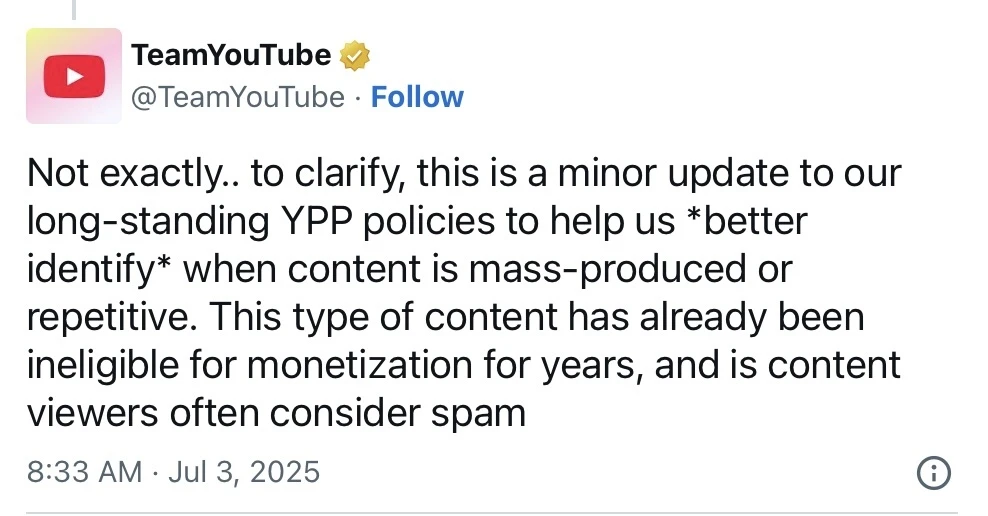
Ritchie stated that this is merely a “small update” to existing YPP policies. The platform is aiming to better identify mass-produced content, which has already been ineligible for monetization, as it is often seen as spam by users.
According to the new guidelines, content that uses AI voiceovers without any added commentary or personal storytelling may not qualify for monetization. Similarly, reaction or summary videos that lack a unique perspective, creativity, or follow a repetitive formula—especially on Shorts—could be affected.
With the rise of AI technology, YouTube has been flooded with junk content and low-quality videos. It’s now common to see AI voiceovers layered on top of images, video clips, or recycled content using text-to-video AI tools.
Some of these videos even impersonate breaking news. In another case, a viral true-crime series on YouTube was discovered to be entirely AI-generated, according to 404Media.
Low-quality AI-generated videos have in some ways undermined the platform’s credibility, and YouTube is looking to reduce them. However, the company has downplayed the upcoming policy changes, referring to them as just a “small update” aimed at combating spam, in an official email statement.
Moderation will never be perfect, and it remains unclear exactly what kinds of videos will fall under YouTube’s demonetization criteria. According to Gizmodo, both Google and YouTube still want AI to be a powerful support tool within the platform. As a result, users will have to wait until July 15 to find out whether their content will be demonetized.